


As orthodontic treatments and dental equipment have advanced, patients now have more choices than ever. Modern corrective techniques include:
- Traditional brackets
- Modern self-ligating bracket solutions
- Clear aligners
Each system effectively realigns teeth, but they differ in design, comfort, maintenance, and suitability (determined on a case-by-case basis). To understand which offers the best balance of efficiency, aesthetics, and practicality, this guide explains:
- How modern bracket systems work
- Where clear aligners fit in
- How to choose the right orthodontic solution
Understanding Modern Orthodontic Bracket Systems
An orthodontic bracket is a small attachment bonded to each tooth. Together with an archwire, bracket systems apply a gradual, controlled force to reposition teeth. The way the archwire is secured defines the type of bracket system.
Traditional brackets use elastic or metal ligatures to secure the archwire. These can create additional friction as the teeth move and require regular adjustments.
By contrast, a self-ligating bracket features an integrated clip (sliding mechanism) that holds the wire without elastic ties. This allows for more efficient wire engagement and can reduce adjustment times.
Bracket systems are available in metal or more aesthetic options, including the ceramic bracket, which blends more naturally with tooth colour for patients seeking a discreet solution.
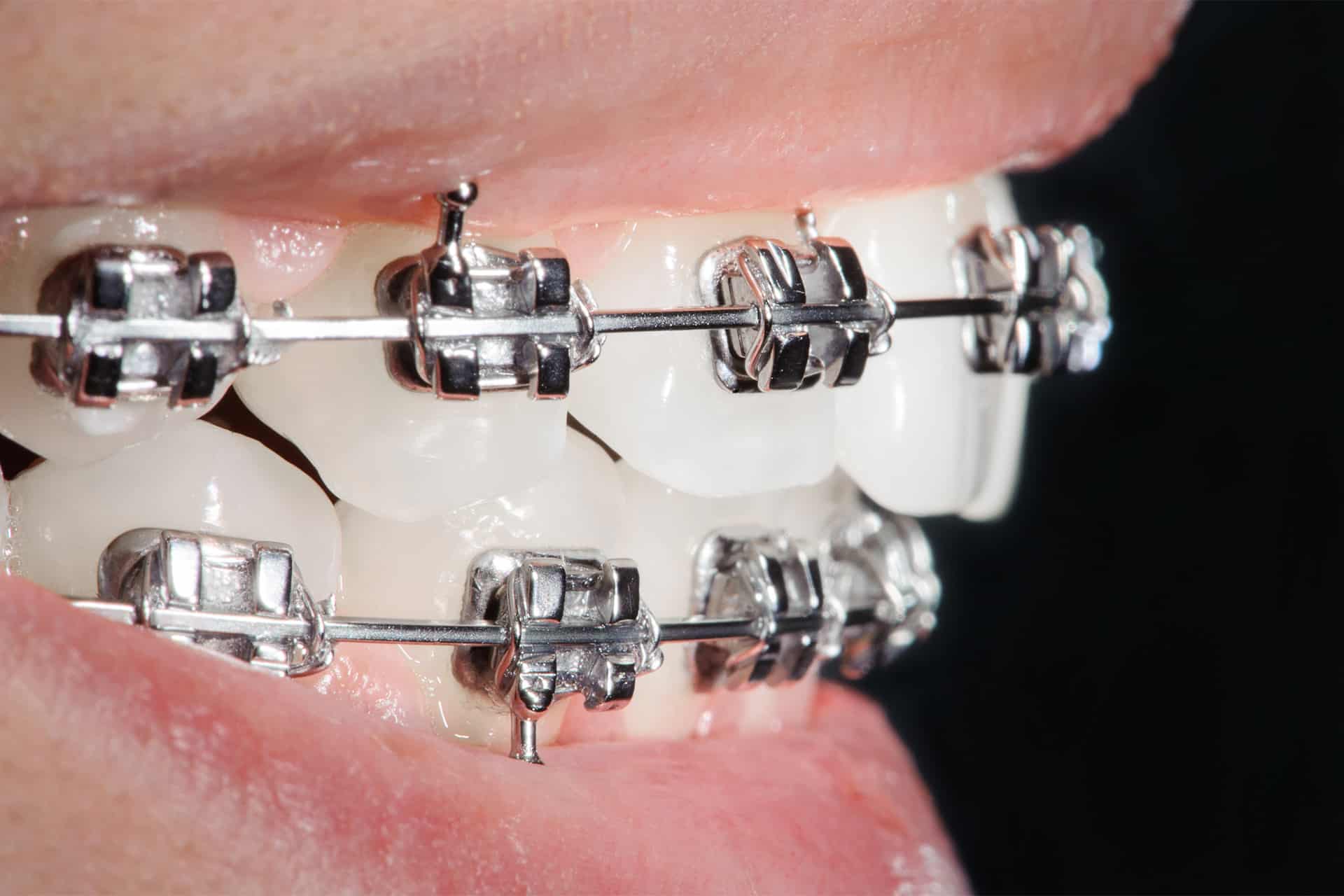
Self-Ligating Bracket vs Traditional Bracket: Key Differences
While both systems are clinically effective, there are notable differences in performance and patient experience:
- Treatment efficiency
A self-ligating bracket is designed to reduce friction between the bracket and archwire, supporting more efficient tooth movement and shorter adjustment times (depending on case complexity). - Comfort
Without elastic ligatures, self-ligating bracket systems impose lighter forces (in certain stages of treatment), which patients often find more comfortable. - Oral hygiene
Traditional ligatures can trap plaque and food debris. Because a self-ligating bracket eliminates elastic ties, it may simplify cleaning and improve hygiene during treatment. - Maintenance
Elastic ligatures must be replaced at each visit, whereas self-ligating mechanisms are built into the orthodontic bracket.
The choice depends on:- Clinical objectives
- Patient preference
- The orthodontist’s approach
Where Clear Aligners Fit in Orthodontic Treatment
Clear aligners offer a removable, near-invisible alternative to fixed bracket systems. They suit mild to moderate alignment issues and appeal to patients prioritising aesthetics and flexibility.
However, aligners rely heavily on patient compliance and must be worn for the prescribed hours to achieve results. A self-ligating or ceramic bracket may offer greater control and predictability in complex cases involving:
- Significant rotations
- Vertical movements
- Bite correction
Aligners and brackets are not competitors but complementary dental accessories within modern orthodontics.
Choosing Advanced Orthodontic Solutions with W&H Tech
W&H Tech provides precise, durable, and performance-driven orthodontic bracket solutions to support clinicians with advanced dental technology suited to any contemporary practice.
To explore professional-grade dental equipment or discuss your exact requirements, please explore our user-friendly site or contact us to speak with the team.
FAQs
What is a self-ligating bracket?
A bracket with a built-in clip mechanism that secures the archwire without elastic ligatures.
Do self-ligating brackets improve oral hygiene?
Yes, they may reduce plaque retention compared with traditional elastic ties.
Are self-ligating brackets faster than traditional brackets?
They can improve efficiency in certain stages, but treatment time depends on case complexity.
Do clear aligners work for complex orthodontic cases?
They are highly effective for many cases, but may be less suitable for complex movements.
How do patients choose between aligners and brackets?
Selection depends on:
- Clinical needs
- Lifestyle
- Aesthetics
- Professional guidance
